Showing posts with label Blue Form. Show all posts

Sunday, 30 May 2021

First Banded Demoiselle of the Season.

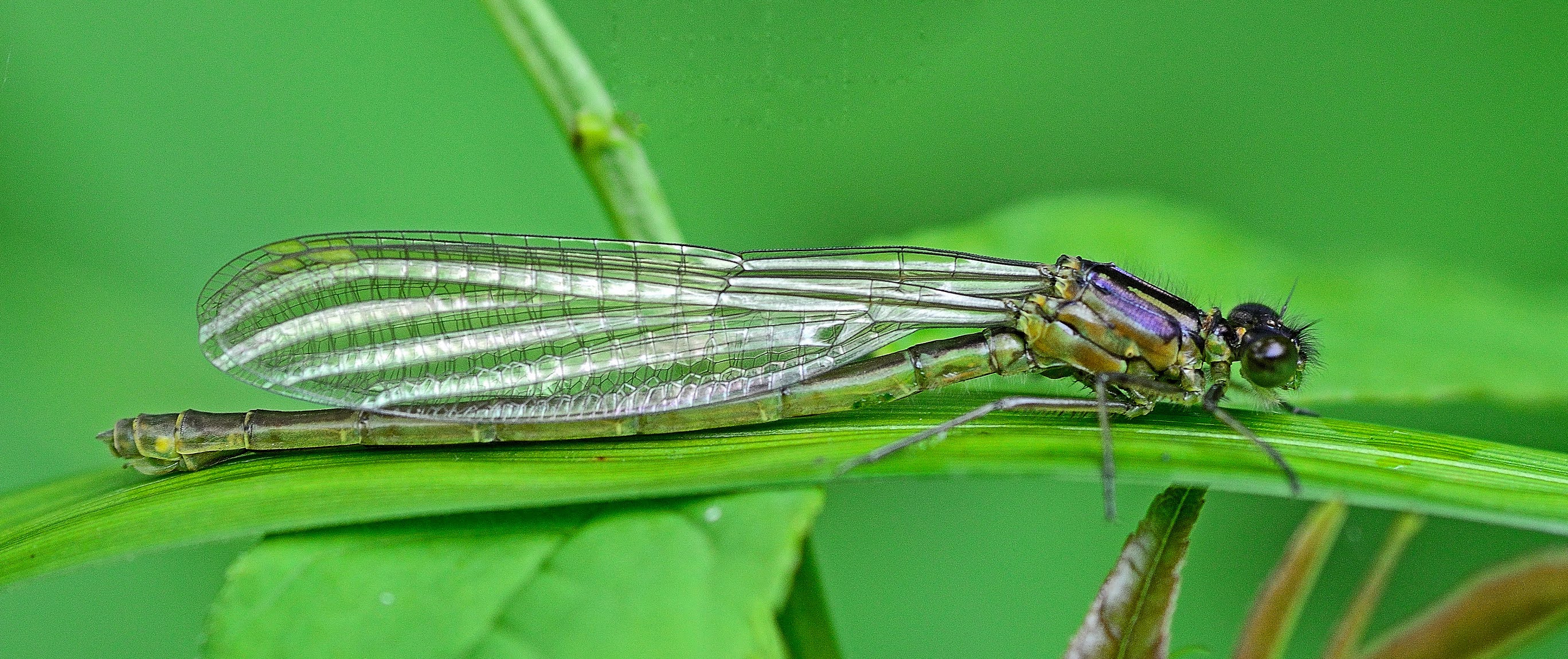
 A return visit this afternoon to Brighstone Mill stream discovered my first sight of a Banded Demoiselle  this year. This immature female was the only Banded to be seen, together with just three Beautiful Demoiselles. 

Earlier in the day  the ponds at Bouldnor Forest produced several Broad-bodied Chasers and a blue form Common Blue Damselfly. With the exception of a few Large Red Damselflies no other species were recorded.


Monday, 8 February 2021

Our Island Resident Species-Damselflies(2).

The Common Blue Damselfly as the name suggests is a species that can be seen throughout the UK. It prefers large water bodies such as lakes, reservoirs, and larger ponds. Of course the male is a striking blue and  the female has two colour forms, dull green and blue. The male and tandem pairs are often seen flying low over open water 


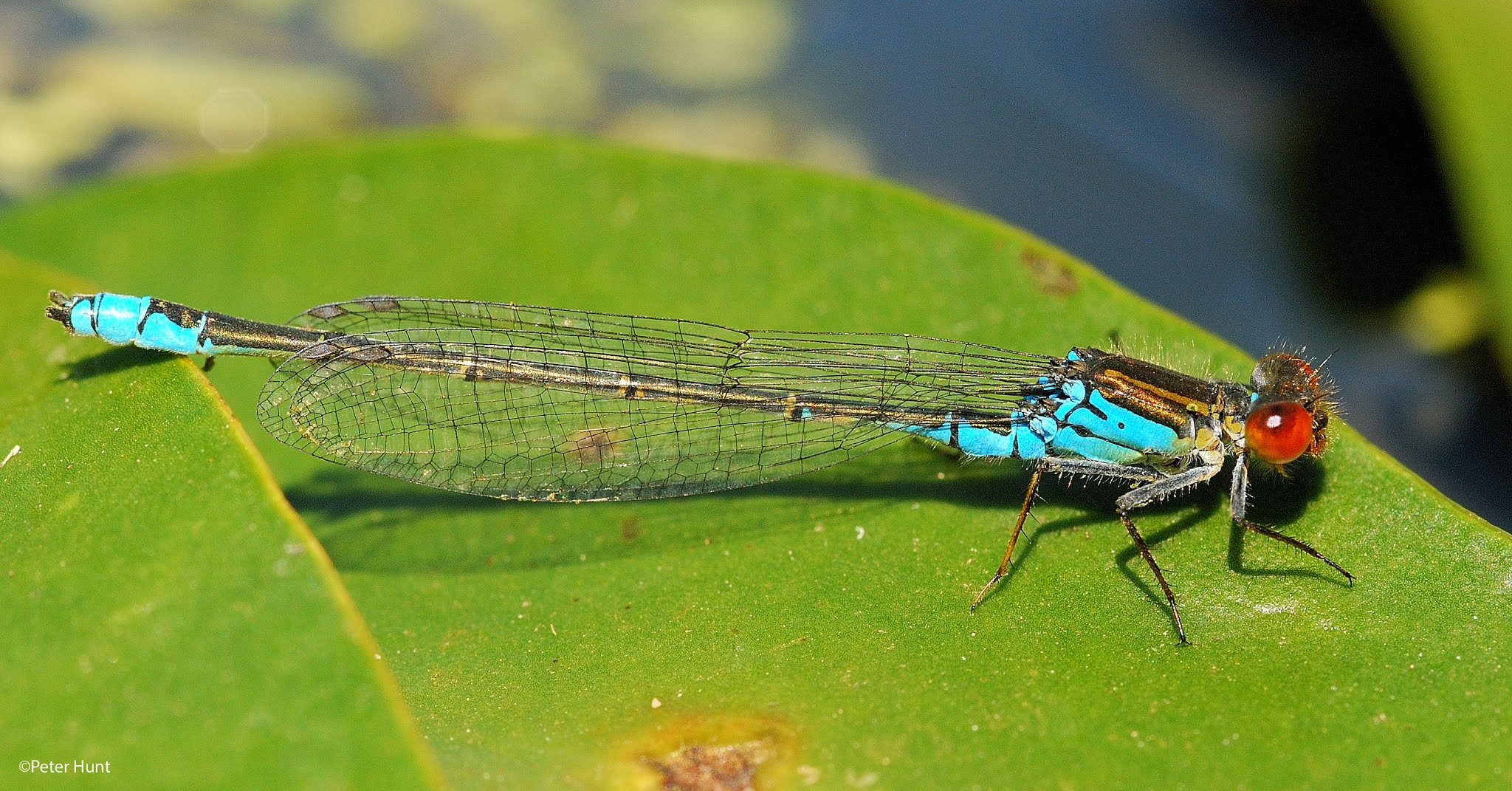
Another blue damselfly is the Red-eyed Damselfly which is quite commonly seen here at large ponds and standing water bodies, particularly with floating vegetation  such as water-lilies. Females and immatures tend to be yellowish-green in colour and new emergents have purple tones in both male and female. They can sometimes be in the company of the Small Red-eyed Damselfly although the former is on the wing in May whereas the Small Red-eyed emerges in late June or July.


Similar in appearance to the Red-eyed is the Small Red-eyed Damselfly. This species was  first recorded only twenty years ago on the Isle of Wight and has now spread around the Island. It too likes ponds with surface vegetation but is quite happy in smaller ponds unlike the Red-eyed. Females can be yellow, green, or blue.


Sunday, 7 February 2021

Our Island Resident Species-Damselflies(1).

 Although several counties of the UK can boast more species, the Isle of Wight has,  to the best of my knowledge, twenty three species of dragonfly and damselfly.  All our damselflies are generally common around the UK, however that changed somewhat with the discovery of the Southern Emerald Damselfly, Lestes barbarus, in 2017 in a forested site in the West Wight. It was later confirmed that this new species has been at this location since at least 2015.

Perhaps the three most prolific species of damselfly are the Azure,Large Red,and the Blue-tailed.Closely following them in abundance could be the Common Blue Damselfly.The Azure is found in particular, in small ponds and ditches and emerges in the spring.The male is blue and the female has two colour forms,green with black and  a blue form.


Emerging slightly eariler than the Azure is the Large Red Damselfly.Another very common species and found in various habitats.There are three colour forms in the female including the mainly black  melanotum. 


Colour forms are again seen in the Blue-tailed Damselfly with five in the female. Perhaps the most attractive is violacea, a  colour seen in some immature females displaying lilac sides to the thorax. Another is  rufescens with orange-pink sides.


. 


Friday, 12 August 2016

An Uncommon Blue.

I was pleased to see this female blue form Common Blue Damselfly in my garden yesterday,particularly as I would not expect to record this species here.She has obviously not emerged from my small pond as this species prefers larger bodies of water.


Tuesday, 3 June 2014

Banded on the Run.

The River Yar at Southford is no more than a stream at this point as it flows through farmland.Here at this time of year the Banded Demoiselles are emerging and today I must have counted at least twenty individuals along the riverbank and on the footpath leading to the river.
In addition good numbers of Common Blue Damselflies are here, as well as Large Red,Azure, and  Blue-tailed.


Saturday, 9 February 2013

Common Blue Beauty

The Common Blue Damselfly is perhaps as the name implies,the most abundant of our damselflies.It is found in still and flowing water habitats and only seems to shun small ponds.
On the wing from late April to well into September the male is particularly handsome,decked out in an electric blue colour.The female comes in two colour forms,dull green and blue.
One of my favourite damselflies.


                                                            Blue form female
                                                            Green form female