Showing posts with label Red-eyed Damselfly. Show all posts

Monday, 8 February 2021

Our Island Resident Species-Damselflies(2).

The Common Blue Damselfly as the name suggests is a species that can be seen throughout the UK. It prefers large water bodies such as lakes, reservoirs, and larger ponds. Of course the male is a striking blue and  the female has two colour forms, dull green and blue. The male and tandem pairs are often seen flying low over open water 


Another blue damselfly is the Red-eyed Damselfly which is quite commonly seen here at large ponds and standing water bodies, particularly with floating vegetation  such as water-lilies. Females and immatures tend to be yellowish-green in colour and new emergents have purple tones in both male and female. They can sometimes be in the company of the Small Red-eyed Damselfly although the former is on the wing in May whereas the Small Red-eyed emerges in late June or July.


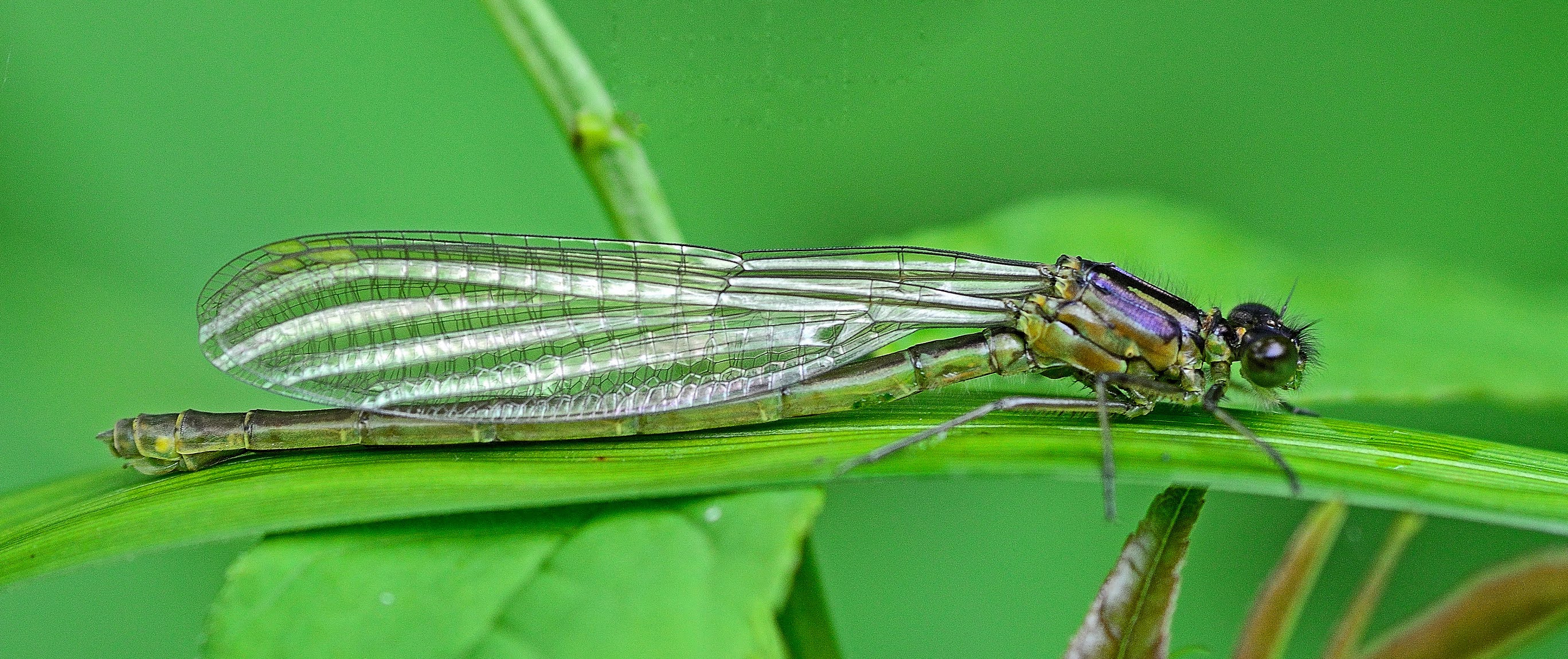


Similar in appearance to the Red-eyed is the Small Red-eyed Damselfly. This species was  first recorded only twenty years ago on the Isle of Wight and has now spread around the Island. It too likes ponds with surface vegetation but is quite happy in smaller ponds unlike the Red-eyed. Females can be yellow, green, or blue.


Wednesday, 17 July 2019

More Red-eyes.

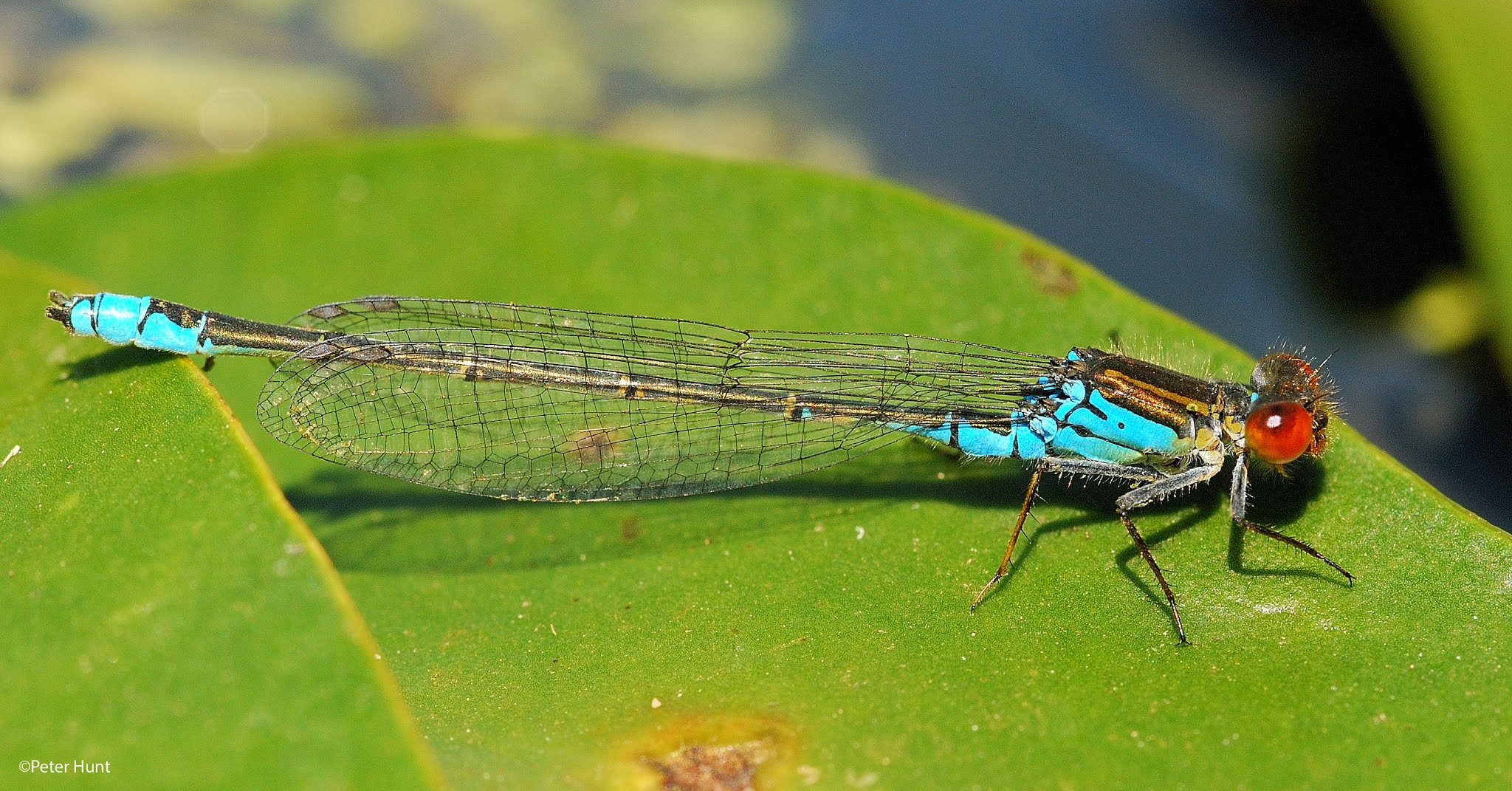
The Red-eyed Damselfly or Large Red-eyed,as the name suggests, is a slightly bigger and more robust damselfly than its relative the Small Red-eyed Damselfly. Whereas the latter normally appear here at the beginning of July,the Red-eyed can be seen at the start of May.In fact an immature male was spotted at my garden pond on the 29th April this year.
This species is closely associated with floating leaves,typically water-lillies,and they favour large ponds and lakes where this plant grows.On the Isle of Wight the ponds at Stag Lane and Dickson pond which is close by, are good sites.
Both species can be seen in the same locations and can be difficult to tell apart.The following photographs show the Small Red-eyed Damselfly,except the two final images which are of an immature male Red-eyed.


Mature female


Immature male


Immature male

Monday, 29 April 2019

First Azure Makes a Final Appearance.

It was with great surprise that I today saw an immature male Red-eyed Damselfly at my garden pond.It is the first time  this species has been recorded in the garden. I wonder if this is a one off or maybe as my pond has water lilies,further sightings could be possible especially as my next door neighbour  has a larger pond than mine and it is full of water lilies.
Earlier in the day at one of several small container ponds that are in the garden there was an exuvia on a plant stem.The damselfly it seemed,had already flown but some time later it was noted that an expired teneral male Azure was floating just under the water surface.Whether this was the damselfly that emerged is unknown but it would seem likely.Anyway this the first sighting of Azures this season.


Friday, 11 May 2018

A Slow Start at a Local Pond.

This time last year the Red-eyed Damselflies were emerging from Dicksons pond near Newport.No such luck this year no doubt because of the poor weather of early spring.In fact no odonata were seen and the only sign of any dragonfly activity was this excuvia found on a bankside reed stem.This is the nymph case of a Broad-bodied Chaser,a common dragonfly at this time.   


Thursday, 18 May 2017

Red-eyes Now Appearing.

Despite the promise of a sunny day the cloud returned during the morning and by the time I arrived at my chosen location of Dickson pond it was well and truly overcast.However the damselfly species that I had come to see had decided to ignore the inclement weather and was emerging among the reeds around the pond.The Red-eyed Damselfly normally emerges during May whereas the very similar Small Red-eyed Damselfly is out towards the end of June.Both species can be found in the same habitat so when seen together careful inspection is required to tell them apart.


Monday, 23 June 2014

More Scarce Chasers

A morning visit to private fishing ponds on the Island and three Scarce Chasers.The two males were perching in the sun for all to see but the third a female,was in reeds adjacent to the path and would have been missed if we had not seen it land.She stayed stock still for some time and gave us close views of her beautiful colouring.
Also at the ponds today,a large population of Red-eyed Damselflies.mainly out on the water on the lily pads,a male Downy Emerald,also a  male Black-tailed Skimmer,together with an Emperor Dragonfly and an early Southern Hawker, in flight.


Wednesday, 6 February 2013

Something to Brighten-up a Dismal Day

I have only seen the Red-eyed Damselfly at one location on the Isle of Wight to date.A while ago in the month of June I was fortunate enough to be invited to a collection of fishing lakes where this species could be found.
Sadly the day of the visit was overcast and damp.Nevertheless a wander around the lakes did produce several sightings of this damselfly.Generally views are restricted to individuals on lilypads out on the water.
However perhaps because of the dismal weather conditions I was very lucky to come across a male on foliage on the bank. A very handsome damselfly and always worth looking for.